
Kitchen Tiling Ideas for Auckland Homes
Kitchen tiling needs to do more than look good on the day it is installed. In a busy Auckland home, kitchen tiles need to handle cooking, cleaning, spills, foot traffic, heat, and daily use without becoming difficult to live with.
The best result comes down to choosing the right tile, grout, layout, and installation approach for the space. A kitchen splashback has different requirements from a kitchen floor. A scullery may need a more practical finish than a feature wall. An open-plan kitchen may need floor tiles that connect properly with the dining, hallway, or outdoor area.
Here are the main kitchen tiling ideas worth considering before you start.
Start With How the Kitchen Is Used
Before choosing a tile, think about how the kitchen works day to day.
A family kitchen needs durable, easy-clean surfaces. A smaller apartment kitchen may need lighter tiles to keep the space feeling open. A kitchen used for entertaining may suit a stronger feature tile or full-height splashback. A scullery or laundry connection may need a more practical finish that can handle water, cleaning products, and regular use.
Good kitchen tiling starts with the layout, not just the tile sample. The tile needs to suit the cabinetry, benchtop, lighting, appliances, and the way people move through the space.
Kitchen Splashback Tile Ideas
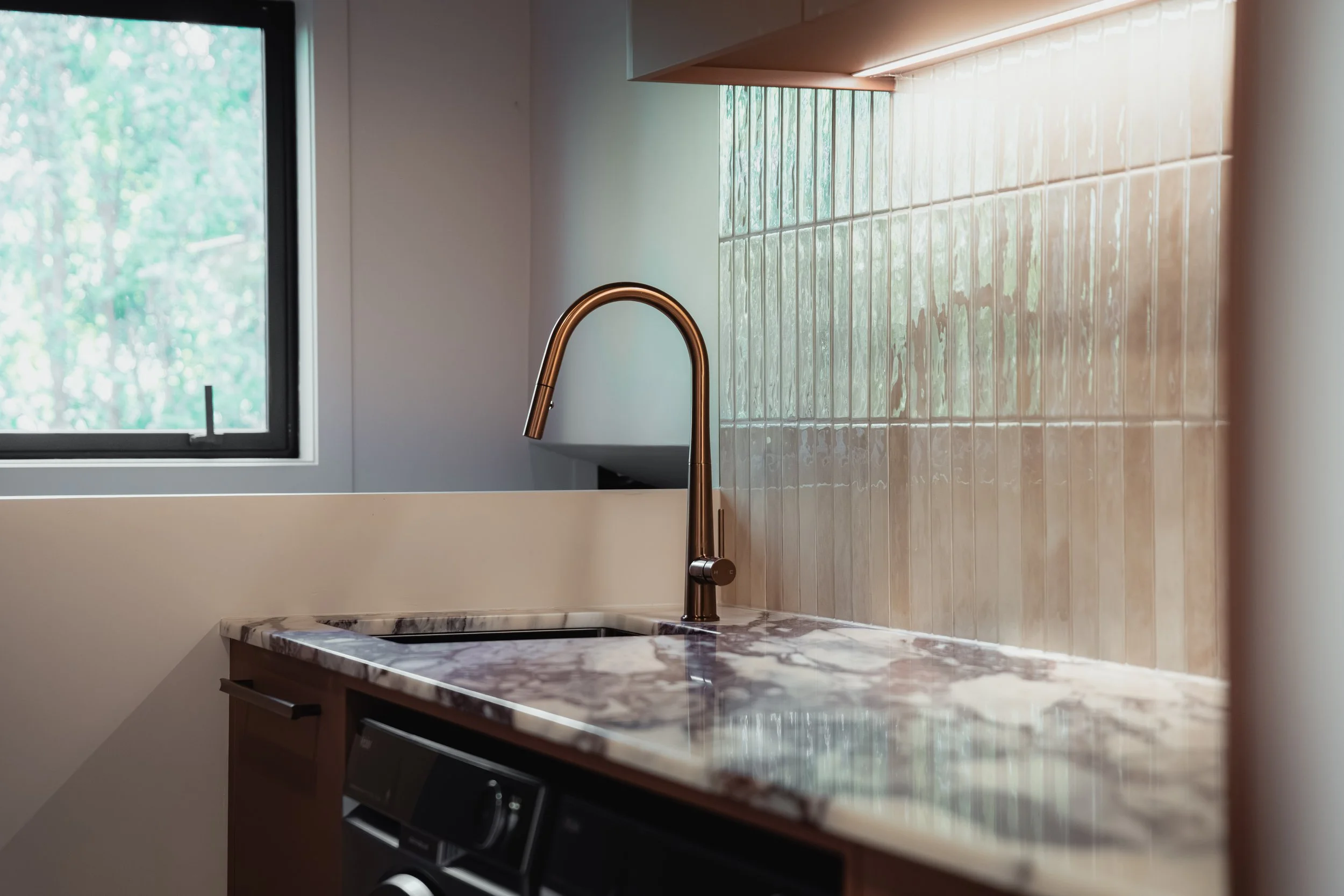
A tiled splashback is one of the most practical and visible parts of a kitchen. It protects the wall behind cooking and preparation areas, but it also has a major effect on the overall look of the room.
Subway tiles are still a strong option for Auckland kitchens because they are clean, simple, and flexible. They can be laid in a brick bond, vertical stack, straight stack, or herringbone pattern depending on the style of the kitchen.
Large-format tiles are another good option if you want fewer grout lines and a cleaner finish. They work well behind cooktops, sinks, and long benchtops where a simple surface is preferred.
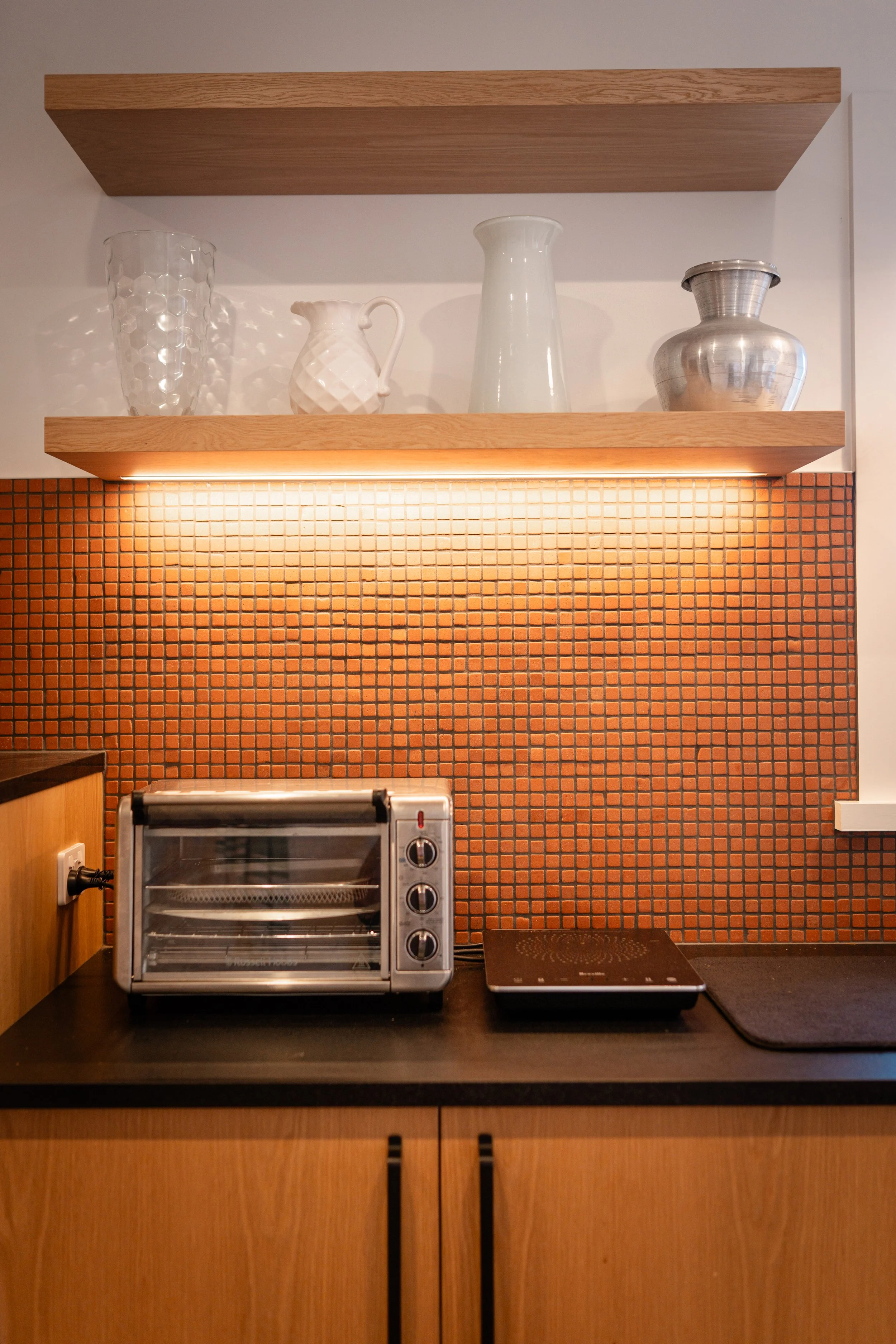
Feature tiles can work well in smaller areas, especially behind a cooktop, bar area, coffee station, or scullery wall. The key is balance. A feature tile should work with the cabinetry and benchtop, not compete with everything else in the room.
Kitchen Floor Tile Ideas
SKitchen floor tiles need to be chosen carefully because they take more wear than wall tiles. Porcelain is often a strong choice because it is hard-wearing, low maintenance, and suitable for busy areas.
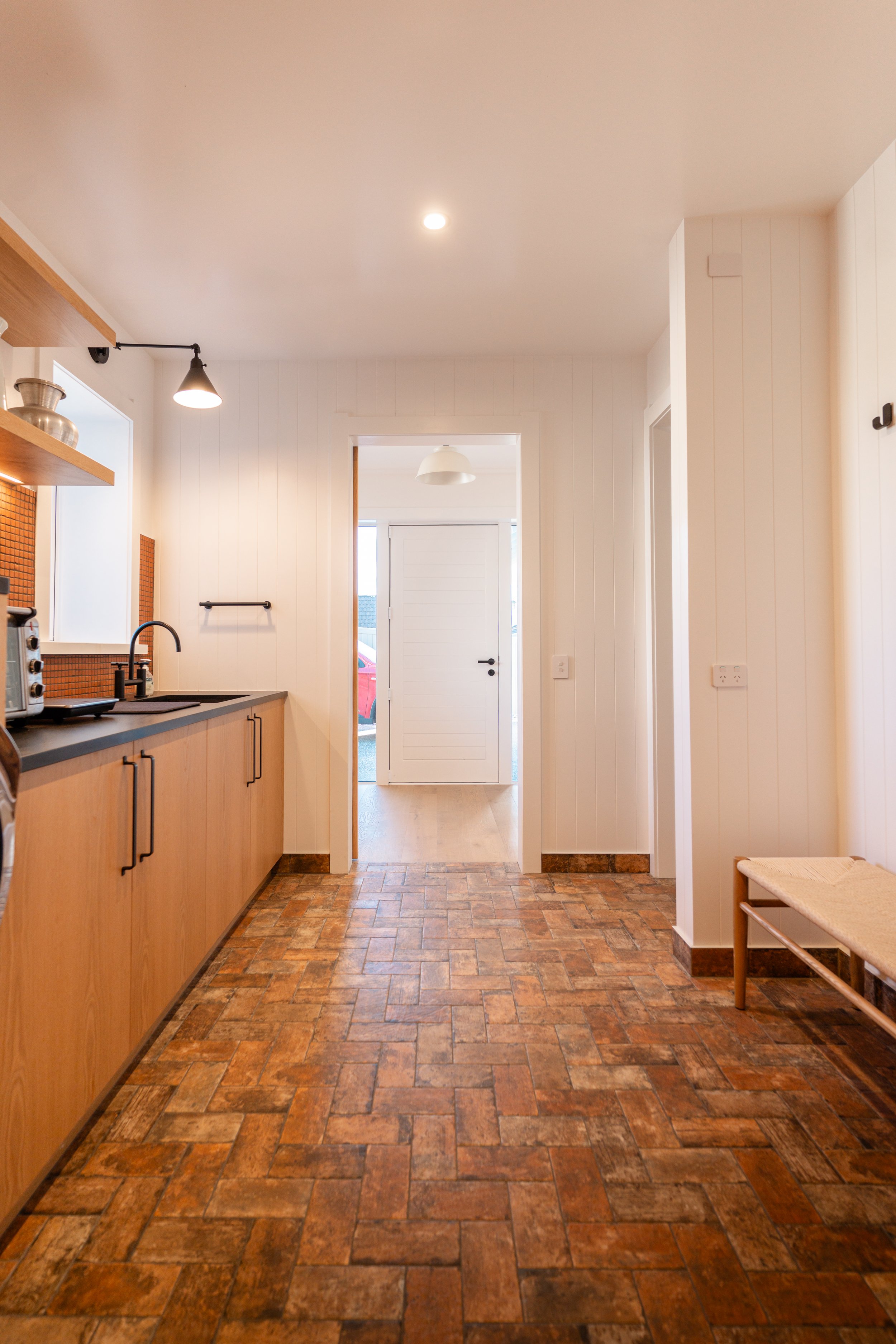
Large-format floor tiles can work well in open-plan kitchens because they reduce grout lines and help the floor feel more continuous. This can be useful when the kitchen connects with a dining area, hallway, laundry, or outdoor living space.
Matt or lightly textured finishes are usually more practical than very glossy floor tiles. They are easier to live with, especially in areas where water, food, or oil may end up on the floor.
The size of the tile also matters. Bigger tiles can create a cleaner look, but they need proper floor preparation. If the floor is uneven, it needs to be dealt with before tiles are installed.
Choosing the Right Grout Colour
Grout has a big impact on the final look of kitchen tiling.
A grout colour that closely matches the tile will create a softer and more seamless finish. This is a good option for kitchens where the tile should sit quietly in the background.
Contrasting grout makes the tile shape and pattern more visible. This can work well with subway tiles, mosaics, and herringbone layouts, but it should be used carefully. Strong contrast can make the wall look busier.
For kitchen floors, mid-tone or darker grout can be more practical than very light grout, especially in high-use areas. The grout choice should suit the tile, the cleaning expectations, and the overall design.
Tile Materials That Work Well in Kitchens
Porcelain tiles are a reliable choice for kitchen floors because they are durable and easy to maintain. They are also available in a wide range of finishes, including stone-look, concrete-look, and timber-look options.
Ceramic tiles are commonly used for kitchen splashbacks and wall areas. They are practical, cost-effective, and available in many colours, shapes, and finishes.
Natural stone can add character and depth, but it needs the right sealing and maintenance. It may not be the best choice for every kitchen, especially where low maintenance is a priority.
Mosaic tiles can be useful for feature areas, smaller splashbacks, or detailed sections of the kitchen. They need careful installation because grout lines and alignment are more visible.
Kitchen Tile Layout Options
Tile layout can change the whole feel of a kitchen.
A brick bond layout gives a classic finish and works well with subway tiles. A stack bond layout creates a cleaner and more modern look. Vertical stack tiles can make a splashback feel taller and more architectural.
Herringbone adds detail and movement, but it needs careful planning and installation. The cuts, edges, and alignment need to be handled properly or the finish can look messy.
For a stronger design feature, tiles can be used behind the cooktop, around open shelving, or across a full wall. This works best when the tile layout is planned around cabinetry, benchtops, rangehoods, powerpoints, and window positions.
Splashback vs Full Wall Tiling
A standard splashback usually covers the wall behind the benchtop, cooktop, or sink. This is a practical choice and works well in most kitchens.
Full wall tiling creates a stronger design finish. It can make the kitchen feel more complete, especially in open-plan homes where the kitchen is always visible.
Full wall tiling can also work well in sculleries, bar areas, laundry connections, and kitchens with open shelving. The main thing is to make sure the tile choice does not overpower the rest of the room.
What to Consider Before Choosing Kitchen Tiles
Before locking in a tile, think about the practical details.
How easy will the tile be to clean? How many grout lines will there be? Will the tile suit the lighting in the room? Does it work with the cabinetry and benchtop? Is the finish practical for a floor, or better suited to a wall?
For splashbacks, consider the size of the tile, the position of powerpoints, the cooktop area, and how the tile will finish at exposed edges.
For floors, consider slip resistance, tile thickness, floor levels, and how the kitchen connects with nearby rooms.
The right tile should look good, but it should also make sense for the way the kitchen is used.
Why Installation Matters
Kitchen tiling can look simple, but small details make a big difference.
Splashback tiles often need cuts around powerpoints, cabinets, windows, range hoods, and benchtops. These details are visible every day, so the set-out needs to be planned before installation starts.
Floor tiling depends heavily on preparation. If the floor is not flat, tiles can sit unevenly or fail over time. A professional tiler will check the substrate, plan the tile layout, and make sure the installation suits the space.
Good kitchen tiling is not just about laying tiles straight. It is about planning the finish before the first tile goes on the wall or floor.
Working With a Professional Kitchen Tiler in Auckland
A professional tiler can help you choose tiles that suit the space, not just the sample board. This includes advice on tile size, grout colour, layout, floor preparation, splashback height, and finishing details.
For Auckland homeowners, this is especially important in renovations where existing walls, floors, cabinetry, and services may not be perfectly aligned. A good tiler will work through those details properly instead of forcing the tile into a poor layout.
If you are planning a kitchen renovation, splashback installation, or floor tiling project, speak with Cutting Edge Tiling before finalising your tiles. The right advice early can make the finished kitchen cleaner, more practical, and easier to maintain.
FAQs
What tiles are best for kitchen splashbacks?
Ceramic, porcelain, subway, mosaic, and large-format tiles can all work well for kitchen splashbacks. The best choice depends on the kitchen style, cleaning needs, grout preference, and how much of the wall you want tiled.
Are porcelain tiles good for kitchen floors?
Yes. Porcelain tiles are a strong option for kitchen floors because they are durable, low maintenance, and suitable for high-use areas. A matt or lightly textured finish is usually more practical than a high-gloss finish.
What grout colour should I choose for kitchen tiles?
Choose a grout colour based on the finish you want. Matching grout creates a cleaner look, while contrasting grout highlights the tile pattern. For kitchen floors, mid-tone or darker grout is often more practical.
Can kitchen floor tiles continue into the dining area?
Yes. Continuing kitchen floor tiles into a dining or open-plan area can create a more connected look. The tile size, layout, and floor preparation need to be planned properly so the finish feels consistent.
Do I need a professional tiler for a kitchen splashback?
Yes, especially if the splashback has powerpoints, windows, cabinets, rangehoods, or detailed cuts. A professional tiler will plan the layout, manage the cuts, and finish the edges properly.